

Hollywood Writer Searches for WWI Soldier from His Mother’s Past
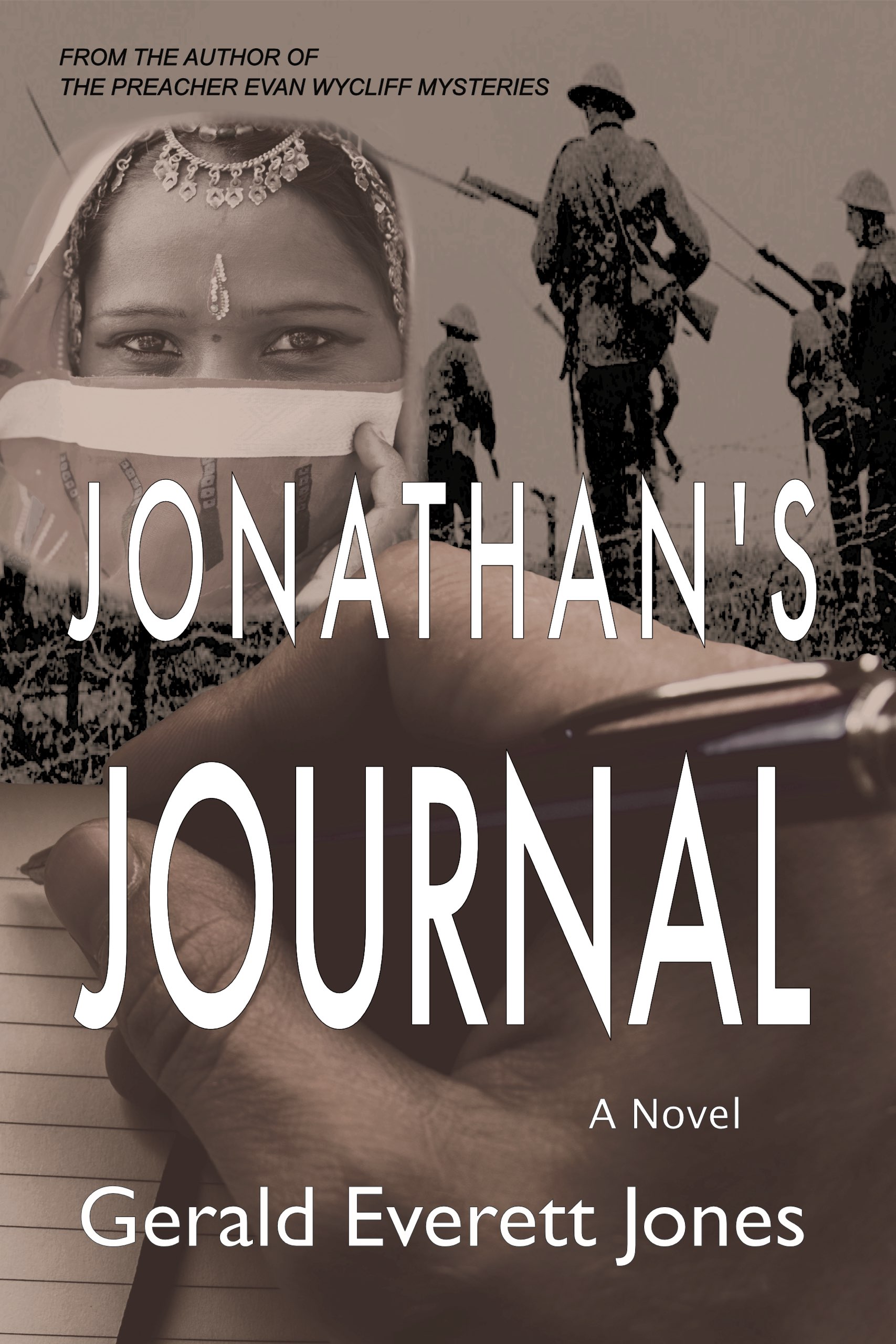
Jonathan's Journal: A Novel will be released on April 14.
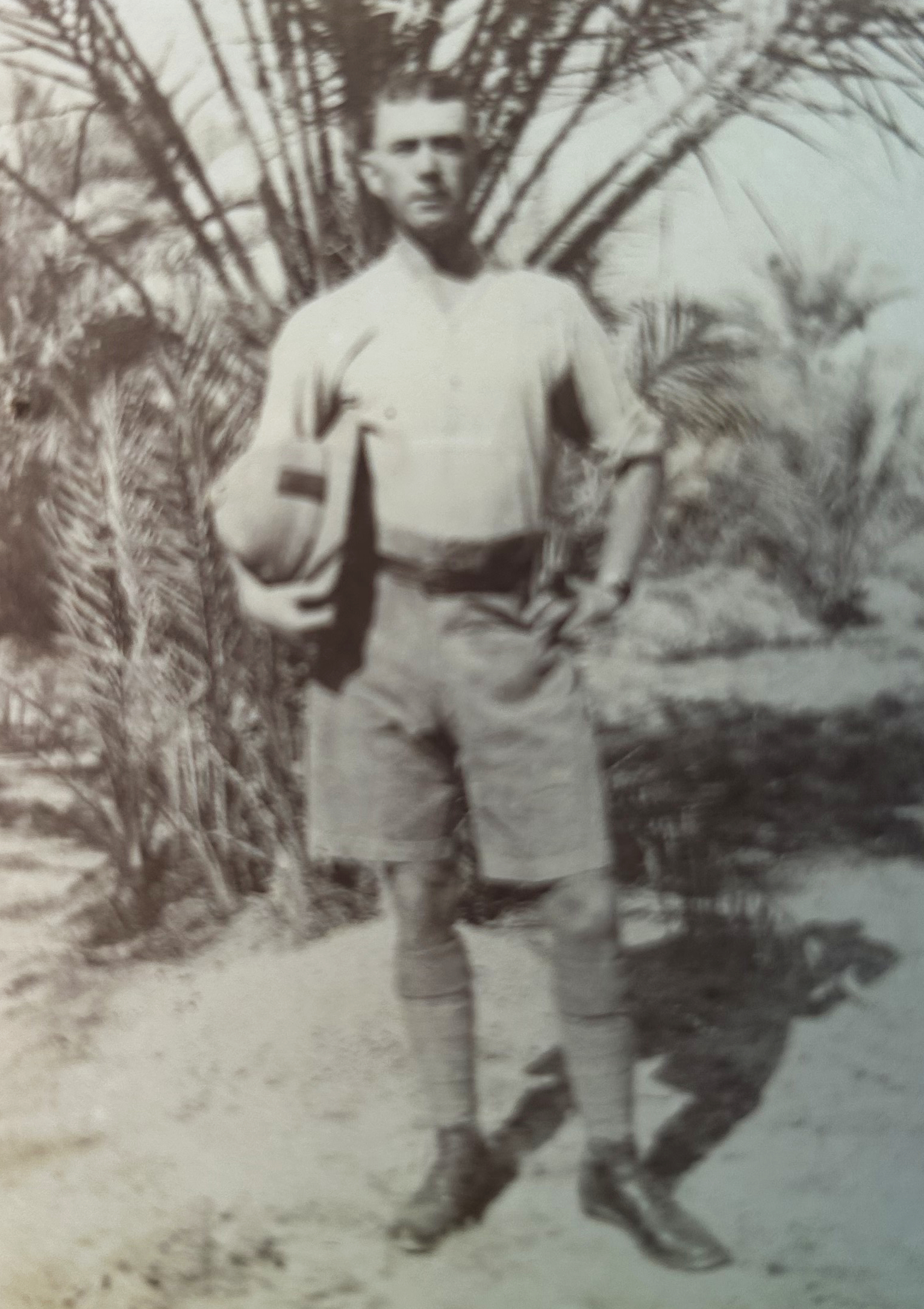
The mysterious RFW. He joined the Royal 1st Devon Yeomanry and became an instructor in musketry.
UK "Orphan Works Licence" covers a diary by an anonymous soldier, a true story at the core of the new novel "Jonathan's Journal" by Gerald Everett Jones.
SANTA MONICA, CA, UNITED STATES, April 5, 2026 /EINPresswire.com/ -- When award-winning screenwriter Gerald Everett Jones discovered an old diary among his late mother’s collectibles, he uncovered a mystery that has continued to perplex him. Written in 1919, “Memoirs of My Travels East” was the personal journal of an anonymous British sergeant. The reason the fellow identified himself only by his initials – RFW – was just one piece of the baffling puzzle.
Jones’s mother had told him she purchased the handsome volume from London’s open-air market on Portobello Road. Since she was a collector of antiquities, he assumed its red-leather spine with gilt lettering and the elegant India-ink calligraphy made the book an attractive curio. She never said, and he was never curious enough to ask her, whether it might be the memoir of someone who went on to become notable, perhaps even a celebrity. Or, as he later worried, perhaps her tale about snatching it up in the flea market was a cover story? Was this fellow perhaps a relative or an ancestor’s lover – someone whose name could not be widely known but nevertheless honored among his dear ones?
As Jones delved into the diary (too late to ask questions of his mother, if she even knew), he realized the tale was dry, reading more like an officer’s field report than an intimate confession. RFW had enlisted in the Royal 1st Devon Yeomanry from his home in Exeter. After serving briefly in France, he was posted to Mesopotamia (now Iraq) to fight the Turks, who were allied with Germany and Austria-Hungary. Late in the war, after surviving battles around Basrah (northern tip of the Persian Gulf), he was sent on to India. There, after recovering from diphtheria, he served as an instructor in musketry, preparing troops to defend the Raj.
With these minimal clues, Jones enlisted his own small army of interns in repeated attempts to track down and prove this fellow’s identity. But due diligence searching genealogy websites and online British military records turned up no decisive matches.
RFW did survive the war and – after three years of adventure, boredom, and episodes of abject terror – returned to his wife (also unnamed) in Exeter in the summer of 1919.
What’s an author to do? Jones thought he might publish the memoir as a true story, but he judged the tale was just too dry. He explains, “I knew the real story had to be between the lines. So, I did what I’ve done many times before. I filled in the rest with my imagination. My interns helped me invent realistic battlefield lore, and I even concocted a love interest for him in India. I narrated the fictional story from the viewpoint of a character like me in the recent past – an introverted history professor who had nothing better to do during the Covid lockdown but to delve into this mysterious journal.”
Jones goes on to say, “As I got deeper into it, the research really grabbed me. Turns out, I never learned the real causes of The Great War. It had a lot to do with ‘the Eastern Question’ and Germany’s plan to build a railroad from Berlin to Baghdad. Before the war, British investors thought that was a fine idea. Then the Royal Navy figured out that the train tracks through the Near East would be beyond the range of its gunboats in the Mediterranean. They then realized the Germans were planning to bypass the Suez Canal, gain ready access to the Persian Gulf, and take control of India and the Far East.”
Jones’s research team discovered that rights to the diary might not be in the public domain, even though it is more than a century old. In case one of RFW’s heirs were to surface, Jones took out an “Orphan Works Licence” with the UK copyright office, which is valid until the work becomes public in 2039. A successful claimant might recover a royalty fee that the office holds in escrow until expiry.
With the soldier’s diary at its core, Jones wrote the historical novel Jonathan’s Journal, which will be published by LaPuerta Books and Media on April 14. For further information, including any leads to the identity of RFW, interested parties may contact bookstore@lapuera.tv.
Jonathan’s Journal is Jones’s fifteenth novel. Among his commendations, he won the New York City Big Book Award for his historical novel Harry Harambee’s Kenyan Sundowner, as well as the Writers Guild of America Diversity Award for his screenplay, Christmas Karma.
Lu Ann Sodano
Publicist
+1 770-356-5030
email us here
Visit us on social media:
LinkedIn
Instagram
Facebook
YouTube
X
Other
"What History Leaves Out" interview with the author
Legal Disclaimer:
EIN Presswire provides this news content "as is" without warranty of any kind. We do not accept any responsibility or liability for the accuracy, content, images, videos, licenses, completeness, legality, or reliability of the information contained in this article. If you have any complaints or copyright issues related to this article, kindly contact the author above.
