
Revolutionizing Hard Surface Customization: How UV DTF Ink and AB Film are Changing the Game | MYRIAD MINDED
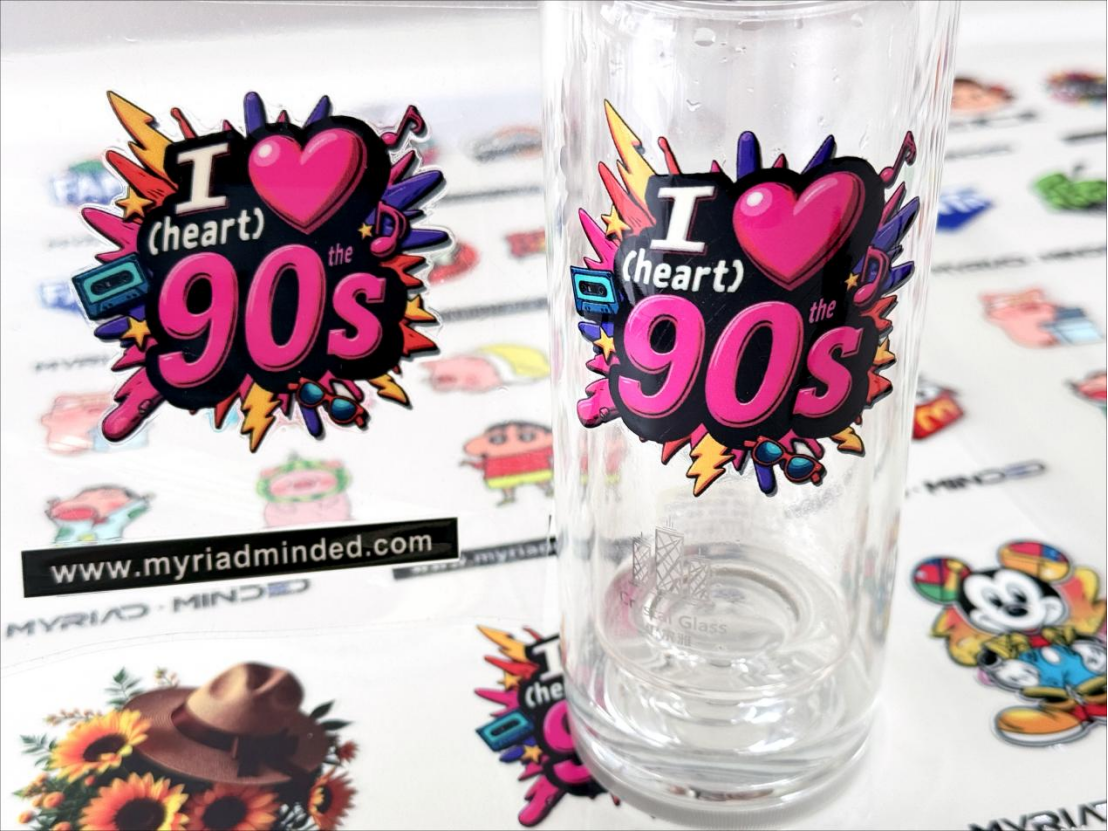
The global demand for personalized and short-run industrial manufacturing has placed unprecedented pressure on traditional decoration techniques. Conventional methods like screen printing, pad printing, and direct thermal transfer often require significant setup times, expensive plate-making procedures, and encounter strict geometric limitations when applied to non-planar objects. Amidst these shifting market paradigms, advanced formulated hard surface ink solutions have emerged as a critical driver for production agility. Modern Hard Surface Customization workflows leverage these highly specialized inkjet fluids to bypass traditional tooling, allowing manufacturers to deposit vibrant, durable imagery onto an expansive array of rigid substrates. By combining chemical engineering precision with digital versatility, these advanced hard surface consumables enable seamless edge-to-edge printing, exceptional mechanical adhesion, and rapid turnaround times that cater directly to contemporary industrial and promotional application requirements.
Understanding Hard Surface Customization and Market Evolution
Hard surface customization refers to the technical process of applying high-resolution graphics, logos, text, or functional coatings onto rigid, non-textile substrates. Unlike flexible fabrics, rigid materials possess distinct surface energies, chemical structures, and physical topologies that present complex engineering challenges for ink adhesion and durability. The primary objective of this specialized customization discipline is to achieve a permanent, scratch-resistant, and chemically stable bond between the decorative layer and the underlying material without compromising the physical integrity of the product.
Historically, the market relied on direct-to-substrate digital UV printing to bridge the gap left by analog methods. While direct UV printing offers exceptional output quality, it remains fundamentally constrained by substrate dimensions, weight, and spatial geometry. Printing directly onto tall, irregular, spherical, or deeply recessed surfaces requires highly complex, custom-engineered jigs and multi-axis robotic positioning systems, which significantly increases capital expenditure and limits operational throughput. Consequently, the manufacturing and promotional sectors required a decentralized decoration paradigm—one where graphics could be digitally printed with high efficiency on a standardized medium and subsequently transferred onto complex, irregular shapes with absolute fidelity.
The Technological Synergy of UV DTF Ink and AB Film
The operational limitations of direct substrate printing led to the breakthrough development of Ultraviolet Direct-to-Film (UV DTF) technology. This process fundamentally redefines hard surface customization by decoupling the digital printing stage from the physical application stage. The success of this methodology relies completely on the sophisticated chemical synergy between specialized UV DTF inks and a engineered dual-film matrix known as AB Film.
The AB Film mechanism consists of two distinct functional layers. Film A, often designated as the printing or base film, features a highly stable release liner coated with a specialized, cross-linked adhesive that possesses excellent initial tack and long-term environmental stability. Film B, referred to as the transfer or positioning film, is an optically clear carrier sheet designed with calibrated peel-force characteristics. During the process, the digital inkjet system deposits specialized UV curable inks—incorporating Cyan, Magenta, Yellow, Black, White, and high-gloss Varnish—directly onto the adhesive layer of Film A. Immediately following the ink deposition, integrated LED-UV lamps partially or fully cure the fluids, securing the precise dot geometry. The printed Film A is then inline laminated with Film B under uniform pressure and temperature.
When an operator applies the finished transfer, Film B lifts the cured ink matrix and the underlying adhesive cleanly away from Film A. The transfer is then pressed firmly onto the target rigid object. Because the adhesive was bound directly beneath the ink during the printing process, applying pressure activates a high-strength bond with the target substrate. Film B is then peeled away, leaving only the high-resolution, multi-layered ink structure and the clear adhesive permanently fused to the object. This technique completely eliminates the need for direct-to-object positioning, allowing complex surfaces to be decorated manually or via simple automated rollers.
Technical Analysis of Material Compatibility and Performance
The operational efficacy of UV DTF systems depends heavily on the rheological properties and chemical formulation of the inkjet fluids. As a benchmark for high-performance industrial applications, advanced solutions such as the specialized formulations developed by MYRIAD MINDED demonstrate how chemical engineering optimizes throughput and longevity. These industrial-grade inks are engineered to maintain exceptional drop-on-demand stability, particularly when deployed in high-frequency piezo printheads such as Kyocera print systems, which require precise viscosity control and uniform particle size distributions.
To prevent nozzle clogging and ensure continuous printing stability, advanced digital ink fluids maintain a strict pigment particle size distribution, typically restricted below 200 nanometers. This tight specification minimizes mechanical sedimentation and stabilizes internal fluid dynamics. Furthermore, the ink formulation balances chemical cross-linking density to achieve a unique duality of performance: high flexibility to withstand the mechanical stress of lamination and transfer, alongside extreme surface hardness once the final cure is achieved. This prevents cracking during application over contoured edges while providing excellent scratch resistance.
When paired with high-quality Crystal Label AB Films, this formulated ink system establishes a flawless mechanical harmony. The chemical composition of the ink ensures that it does not repel or over-wet the pre-applied adhesive on Film A. During lamination, the ink layers and the adhesive interlock at a molecular level. This structural integrity guarantees that when Film B is removed post-transfer, the edges of the graphic remain perfectly crisp, preventing adhesive stringing or partial graphic tearing, which are common failure modes in lower-grade consumable combinations.
Conclusion
The combination of UV DTF ink and engineered AB Film has fundamentally transformed the landscape of hard surface customization. By removing the physical barriers imposed by direct-to-substrate printing, this technology allows businesses to apply high-definition, durable, and visually striking graphics onto virtually any rigid object, regardless of its geometric complexity. The success of this workflow depends entirely on the underlying material science—requiring precise ink formulation, strict quality control, and robust compliance with international environmental standards. As industrial manufacturing continues to shift toward customized, low-volume, and high-frequency production, the reliance on stable, high-capacity chemical manufacturers will remain central to driving long-term operational success and market competitiveness for print service providers globally.
For more technical specifications and to explore comprehensive digital ink solutions, please visit the official company website at https://www.myriadminded.com/.
Myriad Minded Colors Technology (Zhuhai) Co., Ltd.
Myriad Minded Colors Technology (Zhuhai) Co., Ltd.
86-756-8698821
email us here
Legal Disclaimer:
EIN Presswire provides this news content "as is" without warranty of any kind. We do not accept any responsibility or liability for the accuracy, content, images, videos, licenses, completeness, legality, or reliability of the information contained in this article. If you have any complaints or copyright issues related to this article, kindly contact the author above.
